







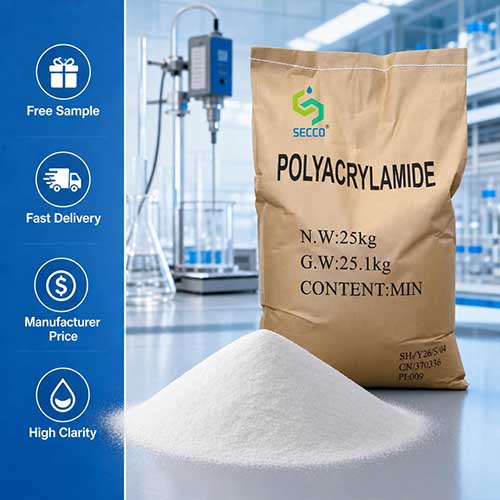
Aedificationes, quales pila portantes, multas voluminas aquarum, lutum, bentonitam et pulchram petram generat. This wastewater forms a stable colloidal system that does not settle naturally under quiescent conditions.
Click to view →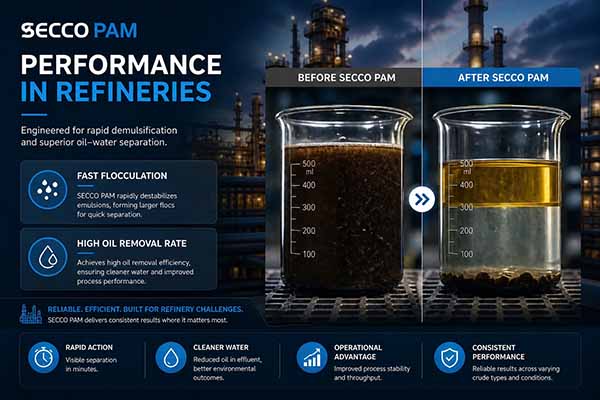
Faced with this challenge, polyacrylamide (PAM) has become an indispensable core agent in oily wastewater treatment, owing to its unique physicochemical properties.
Click to view →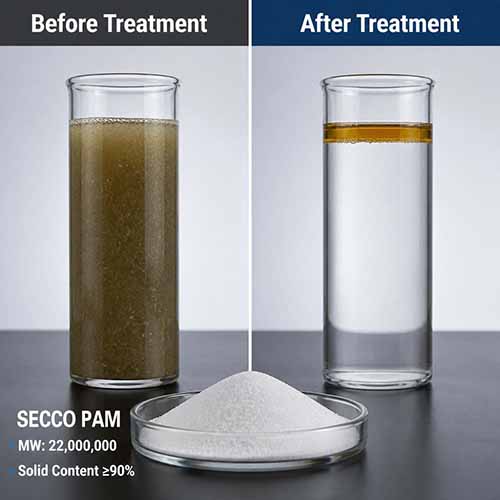
Polyacrylamide (PAM), quasi flocculans excelsus effectus, rolum indispensabile in oleo wastewater treatment propter optimum separationem olei-aquae.
Click to view →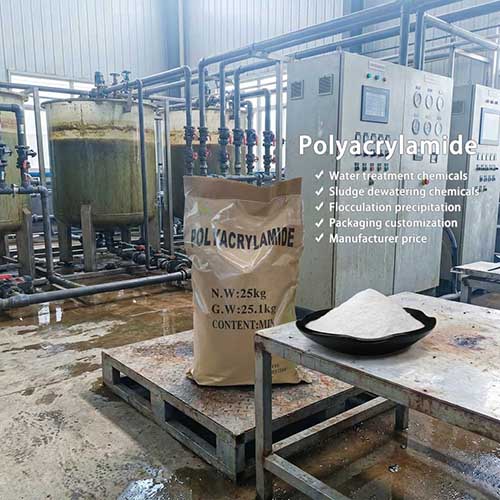
To address the challenges of ceramic wastewater treatment, we offer proven chemical selection and process solutions to help customers achieve discharge compliance and water reuse.
Click to view →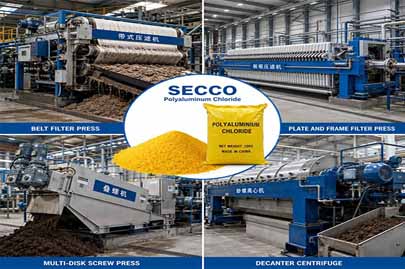
Henan SECCO Environmental Protection Technology Co., Ltd. est provincial-level innovative SME specializing in the R&D, production, and sales of water treatment chemicals, including polyacrylamide and polyaluminum chloride. In the Water Treatment Materials Emergency Industrial Park in Gongyi City, Henan Province, the company has comprehensive production and R&D capabilities, committed to providing high-quality PAC products and professional technical services.
Click to view →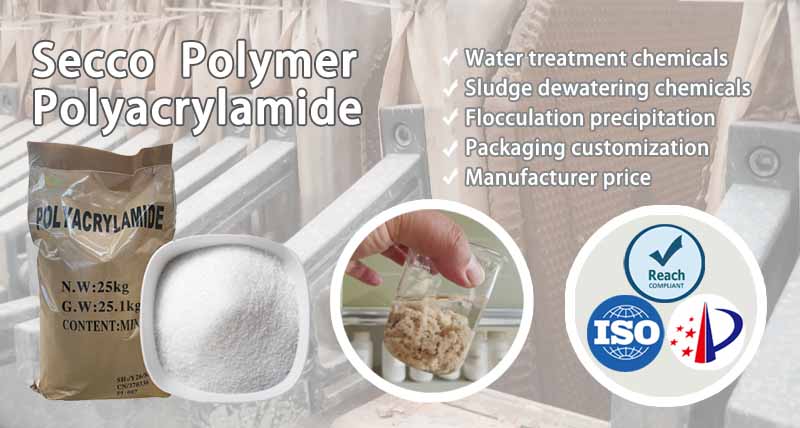
Polyacrylamide (PAM) flocculant (conditioner) in dewatering sludge, significantly improving dewatering efficiency. Its mechanisms of action include two primary aspects.
Click to view →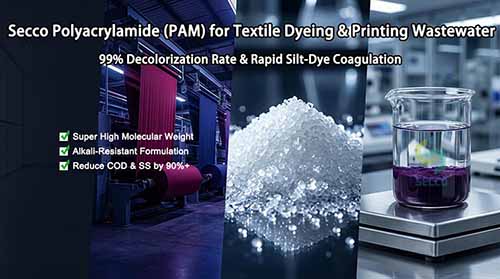
Textile printing and dyeing industry is a vital sector of China's economy, yet it is also a major consumer of water and a significant source of pollution. Statistics show that traditional dyeing processes consume approximately 200 liters of water per kilogram of fabric produced.
Click to view →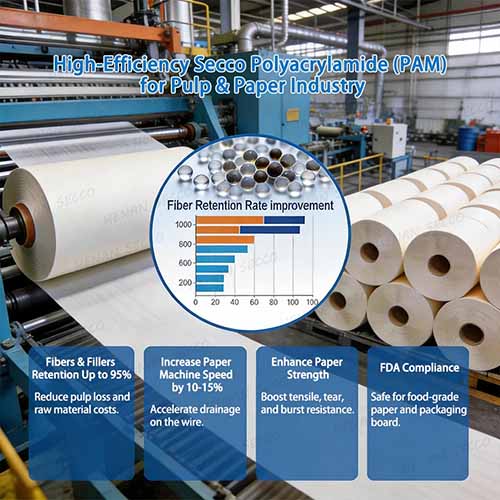
Against the background of tightening global environmental policies and the paper industry's transformation towards a green, low-carbon future, how to efficiently use resources, reduce production costs and ensure compliant wastewater discharge has become a core challenge for many paper enterprises. Among various solutions, polyacrylamide (PAM) – with its excellent flocculation, sedimentation, thickening and strengthening properties – has evolved from a simple “auxiliary additive” into an indispensable processing aid and a key element for process control in modern papermaking.
Click to view →
Non est unius magnus responsus in medio aquarum solitudinis, sed est via efficatior ad resultationes. Cede percutere iniquitatem per maledictionem cogite invenire veritatem per temptationem Contact Henan Secco Environmental Technology Co., Ltd. today to get your customized flocculation solution.
Click to view →
In wastewater treatment, flocculatio et sedimentatio inter maximum et critical gradus sunt. However, many users initially tend to use only one type of flocculant — most often polyacrylamide (PAM). But does use PAM alone really achieve ideal purification results?
Click to view →Si volueritis ad produktos nostros aut habere quaestiones, implete formam inferiorem, quaeso. We will contact you immediately after receiving it. Thank you for your choice.

Tel:+86 18703633076
Email: secco@hnsecco.com
WhatsApp:8618703633076
 Polish
 Russian
 French
 UAE
UAE farsi
farsi belarusian
 Danish
 German
 Filipino
 Finnish
 Sanskrit
 Korean
 Dutch
Dutch Haitian
 Kyrgyz
 galician
 Czech
Czech Latin
Latin Lao
Lao Romanian
 Lingala
 Luganda
 Luganda
 Kinyarwanda
 Lithuanian
 Malay
Malay Bur
Bur Marathi
 Macedonian
 Bengali
 Norwegian
 Nepali
 Portuguese
 Japanese
 Swedish
 Serbian
 Slovak
 Slovenian
 Somali
 Thai
Thai Shierqi
 Ukrainian
 Welsh
Welsh Greek
Greek Hungarian
 Hawaiian
 Hindi
Hindi Indonesian
 Italian
 Vietnamese